
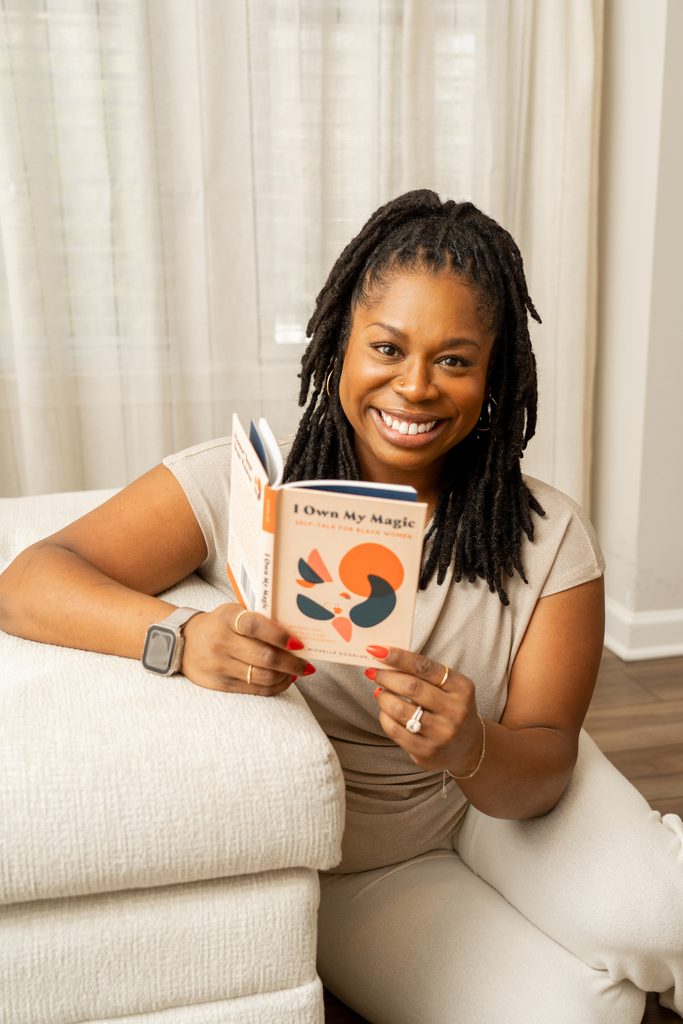
Motherhood and Capacity
A conversation with Vanessa (Interviewer) and Michelle (Guest)
Vanessa:
I’ve been thinking a lot about capacity lately, especially in motherhood. What does that mean to you right now?
Michelle:
I connect capacity so much with energy and time. So for me, capacity has a lot to do with what can I put my energy into or what do I need to preserve because of the season I’m living in.
Vanessa:
That makes sense. And we are both pregnant right now. How has becoming a mother changed the way you understand your own capacity emotionally, mentally and physically?
Michelle:
Oh, it’s changed tremendously. I was someone before I had children who had no awareness of my capacity. I would go, go, go. And even while I’m exhausted, keep going. The queen of overextension. I mean, that was me. And with the birth of my first child, my four year old, I learned so much about how, wait a minute, you actually have way more limits and boundaries now. Hold on. We can’t be doing everything for everyone all the time. There are a lot of things that I had to learn about capacity so that I had energy not only for my family and for what’s important to me in terms of work and relationships, but also for my relationship with myself. I really had to learn what that meant. And motherhood did its its best job of teaching me.
Vanessa:
It’s the best way to learn, right?
Michelle:
Oh yeah, definitely.
Vanessa:
And in what ways would you say that pregnancy and motherhood transformed you beyond what you expected and made you be more boundaried and protected?
Michelle:
Motherhood put me to the test in the best way because I was the queen of overextension and thought I was so powerful that I could do it all and be in control of it all I was in again in the best ways very much humbled when I was postpartum with my four-year-old four years ago I had to learn and honestly quickly it wasn’t something that happened over time. I had to learn quickly, you can’t do it all and you’re not supposed to.
Vanessa:
Right.
Michelle:
You can actually take care of your child and community and that not be a failure. And it’s okay to accept the help that’s offered and that doesn’t make you less of a mother. I had this idea that I was conditioned and socialized to do everything as a mom. And if you’re accepting help, that means you’re not doing it right. That means you’re weak. All of these negative narratives around being a mom who does it all. And I remember one moment I was with my son, I think he was two months old. I think he was eight weeks old at the time, brand new baby. And I couldn’t figure out how to get him to stop crying. I went through the checklist. It was just me and him because his dad was doing the night shift. So I was up in the morning And I so wanted my husband to be able to sleep a little bit after being up all night with him. Cause I got to sleep. So already that’s playing in my mind. And then my little one would just not stop crying, soothed and changes diaper, fed and burped it. You know the list. I couldn’t figure it out. And I was like, well, I don’t want my husband to wake up and I want this little baby to feel better. So I called my mom. answered I think on the first ring I need to give her a lot of credit and praise because she’s been such an integral part of my village. He answered I think on the first ring and said I’m coming over. She was there within five minutes. Why did he stop crying before she got there?
Vanessa:
Of course.
Michelle:
That was like a lot of things in motherhood a lesson and I think Grayson did a great job of teaching me why do you have to figure it all out by yourself who said you had to do that mom call somebody right and that’s that that was one of the many lessons i was learning about releasing this idea that i had to figure it all out by myself and be perfect and asking for help is what’s best for you and your child
Vanessa:
right no that’s a really great example and i think about myself mothering too and I think you and I have the same kind of mentality of I can do it, it’s fine and I was also out in these streets thinking that I can do all these events and see all these people and do all this stuff in this life but motherhood kind of forces you to see what’s important and your child is the most important thing and may need all your attention more than you even can give, can you have that understanding? And so I completely agree with you and I’m glad you called your mom to come over. Glad you let your husband sleep. I understand about sleep with the husbands. So in talking about capacity, I’m also curious about learning parts of yourself softened and what became protected in terms of, you know, how you were navigating motherhood.
Michelle:
Oh yeah. Oh my, I think my dependence on control and needing to be in control softened tremendously. The way that I have released her, our relationship is so much healthier now I’m not clinging to her for dear life. I think that has softened in me the most out of everything else. When I say the kind of releasing control, there’s so much under that umbrella specifically for me. So recognizing that things are not always going to go as planned and that’s okay. that mistakes, I love the word lessons. I don’t know if you can tell, but there are so many lessons that can show up in parenting your child. And I also think in releasing control, I’m just accepting more, accepting more, the process more and just living in the present more. When I was too attached to control, I found myself living in the future too much.
Vanessa:
Oh, yeah.
Michelle:
And that caused me to miss some moments in the present that were happening with my first born. And I look back on pictures. Pictures tell a lot of stories for me. And sometimes I’ll look at a picture and go, ooh, do you remember what you were stressed about then? That doesn’t really matter now. or you had a lot of anxiety here, but it ended up being okay.
Vanessa:
Right.
Michelle:
And I don’t say that to minimize my experience, but to truly recognize the bigger picture. And again, I was a first-time mom, just like a lot of us during a very critical and unsafe feeling time in our country and in our world. So I do give my past self tons of grace. But I also want to learn from those experiences. So for this pregnancy with my twins, I’m going to have and be way more present because everybody is right. That time does go by very quickly.
Vanessa:
It does. I mean, I remember when you told me you were pregnant and I told you I was pregnant. And then you said, and then when I reached back out, you said I’m in my third trimester. I said, wait, what? Where have I been? But it’s like, you’re so focused on the journey because I don’t know about you, but first trimester is just hell. And then next thing you know, you’re like back up again, but then it’s the second trimester. And then it’s like, oh, I’m in my third trimester. Oh, the babies do, it’s crazy.
Michelle:
It’s crazy. And it’s like, we’ve learned so much since the first time around, but there are so many new things that I’m still experiencing here that I appreciate, that I’m grateful for. So the second part of your question of the parts of me that needed to be more protected has a lot to do with time. Very protective of my time more than when I was even as a first-time parent.
Vanessa:
Yeah.
Michelle:
I take the role of motherhood so seriously. And my husband does the same thing in terms of fatherhood and us together parenthood. We love spending time with our kid.
Vanessa:
Yes.
Michelle:
Right, so we are, I include him because I’m thinking about his boundaries too, but I have a lot of boundaries around work that are, I don’t shift. I have my work hours, I have the ways that people communicate with me, and I’ve learned over the years, specifically prioritizing certain things. What is most urgent and most important here? Can it be delegated? Can that wait till next week? I’ve had to practice time management and organizing my task appropriately, so that I can be present with my son. Again, a lot of lessons learned, but one example is my husband will pick up my son from school and I told myself, I need to be, and I work from home. I need to be up and out of my office before he gets here.
Vanessa:
Yes.
Michelle:
Do you know that was a challenging boundary? I would find one more email to send or one more piece of content to create or one more progress note to complete and it took a lot of practice. And most importantly, what’s on the top of my brain is seeing my son come in and, mommy, are you still working?
Vanessa:
They know.
Michelle:
He’s respectful and curious. This sense of guilt started to form because I didn’t want to get used to that image of assuming he comes home, his mom is working, we can’t disturb her. now we need to tiptoe around. That helps me so much. So much. And now I think I’ve got the hang of it in terms of my schedule even of that cutoff time. So that I can greet him when he comes in. I can join him in his play. Give him a snack. Like that means a lot to me as a mom. And I’m thinking about his childhood.
Vanessa:
Yes.
Michelle:
Right? We’re helping create their childhood. This it’s a long experience of adulthood for us.
Vanessa:
Right, it is.
Michelle:
And it’s just a little bit of their childhood so that has been helpful and protecting my time has been very important to me.
Vanessa:
That’s so beautiful and I love that you honored him and he is ready to engage with you when he comes home because you’ve already left that work you know on the side and so I’m sure he’s appreciating that so much more now.
Michelle:
Yeah
Vanessa:
That’s really sweet and insightful too. It’s like almost that the child is needed to help us to know what’s important in life. I’m also curious because you are a therapist, did you notice your professional lens shifting after becoming a mother?
Michelle:
I am and was a patient provider and clinician, but I definitely think I’m even more so. And again, giving my younger self some credit, she’s understanding, but I think I’ve become even more understanding. I think those parts of my work have really deepened to understand and other people’s experiences. And you just never know what folks are going through, even if they’re presenting like everything is fine. These are always known, but again, I just think they’ve deepened. I understand it more, and that’s helped me connect with people even more through my work as a therapist. Compassion, acceptance, understanding, those parts of my work have deepened. And I see when I’m working with my clients in our therapeutic relationship, I see their changes in the work that they’re doing, and I highlight it even more. I think that’s grown up since I’ve become a parent.
Vanessa:
Yeah, that’s really great. It’s almost an enhancement of the work that you’re already doing, which is really lovely. Thank God for parenthood. It comes with its own challenges, but there’s a lot of beauty and lessons, as you mentioned, that comes from it. What did you learn in your first pregnancy that you’re carrying into this season with more ease and clarity?
Michelle:
It’s okay to mess up, Steph. It’s okay. I love personifying the things. I really do. So just like my relationship with control a lot healthier, so is perfection, specifically as a parent. Again, my husband comes to mind because that’s my partner, that’s my road dog, that’s my team member. And I’m thinking of him because together we talk a lot about parenting, a lot of talking about what’s best for our son, how to address something behaviorally. I mean, we’re having the discussions. And something we’ve embraced as a team is we were not supposed to be good at everything when it comes to Vanessa. Who told us that? And we certainly don’t want our son or our twins that are coming to think that’s the norm.
Vanessa:
Right.
Michelle:
We are actually designed to practice, to have progress in moments, to not necessarily be skilled in everything. And we try to apply that to our parenting. If the core foundations of him being safe and having security are met, we can figure the other pieces out. And if certain things take time, it’s okay if it’s taking a minute for Grayson to learn something. Again, as long as he’s safe, and we’ve adapted this kind of affirmation, if you will. It’s not about the problems, it’s how we handle the problems.
Vanessa:
Amen.
Michelle:
Right? It’s not about the problems itself, it’s how we approach it, and we will have to tell each other that in those tense moments, but the potty training moments,
Vanessa:
oh Lord, tell me about it,
Michelle:
the sleep declaration moment, the moments where we didn’t expect something, it’s not about the problem, how are we going to approach it? And we bounce off each other on that, depending on our capacity.
Vanessa:
Right. And I think what’s also beautiful is that your child will show you what they actually need and sometimes they’ll surprise you with knowing something like, oh, wait, you know about that? Okay. It’s like they are listening. They know what to do. But sometimes it’s, it’s, I don’t know if it’s like our environment, what people, because there’s more information now on parenting. everybody has an opinion you know the parents have an opinion the internet has an opinion even the doctors have an opinion but it’s like you know your child better than anyone so we got a it’s like a perfect marriage of okay what do i think what does my partner think what does my child think um it’s it’s it’s interesting
Michelle:
yes it is and it we may talk about this later but something else that I’ve learned about and have taken with me from being a first-time parent, I’ve got to be around other parents. That has become an essential part of my care of self, is being in community with other people, raising children. And I know some folks will be like, well, yeah, of course, but after experiencing the isolation of COVID, while being pregnant, and while having a newborn, I have just grown to feel so grateful for other parents and their experiences. And that helps me with my own mental health. A lot of us are going through the exact same things, but not all of us are talking about it.
Vanessa:
Right.
Michelle:
Sometimes it’s because of shame or just lack of community or lack of communication. There’s so many reasons. But I’ve built a small network of friends who are parents, our children are in similar ages, and we try our best to stay connected to each other virtually in person, how are you doing? Well, how is it going with nursing? Were you able to get the latch together? Well, what kind of diapers are you using? I’m liking those. I mean, what are y’all doing this weekend to not watch TV all day?
Vanessa:
Right.
Michelle:
It’s those micro conversations that provides so much validation and ease for me as a parent. So that has become an essential part of my care, is staying connected to other parents.
Vanessa:
Yeah, and I’m hearing a recurring theme of not doing stuff alone anymore. The time you called your mom, and then also with having other parent friends who can validate your experience, which is, yeah. I mean, I think sometimes we isolate ourselves because we’re ashamed of, oh, I don’t want to share this thing that my child’s doing or that I’m going through, or they should be where, you know, I want them to be, but every child is different and that is really true. Yeah, very insightful, Michelle. Many women talk about how motherhood forces them to let go of people pleasing. Has that been true for you?
Michelle:
Yes, it is. I’m one of those mothers, too. When I think of people-pleasing, I think of this as where your own needs, desires, and wants are repeatedly put to the back in service of other people. And so I had to really, again, I’m using the same words for the same things, but people pleasing did not fit into my motherhood journey. I couldn’t squeeze hands because if I’m not taking care of myself, my family is not getting the healthiest version of me. So if I’m only focused on meeting other people’s needs, and that includes my kids. If I’m only focused on their needs but I’m neglecting my own, we’re not getting the healthiest mommy. We’re not getting the longest partner, friend, sister, daughter. So releasing people pleasing is something else that had to go. It just no longer fit my life. And what I replaced it with is assertiveness and boundaries. Because I know, and I come back to this, I’ve been saying this to myself for years, I’m just too important to not take care of myself.
Vanessa:
Amen.
Michelle:
I’m just too important. There’s a lot that falls if I’m not showing up as at least trying to do the healthiest version of myself. I’ve seen that as a parent in particular. I’m snappier, I’m not as regulated, show up exhausted and distracted. And my kids don’t deserve that. They don’t.
Vanessa:
It’s true.
Michelle:
So if I’m only doing things in service of others, I have to check that. And fortunately that’s something I’ve worked on very actively in my own mental health journey. So I feel good in saying that, I feel confident in saying that, but there was a time when that was really, really hard for me.
Vanessa:
Yeah, same girl. Yeah, no, I think that’s really helpful. And I think that sometimes certain events in our lives force us to have to do the work of, you know, letting go of that part of us that used to bend and let go of ourselves. and I think that motherhood is fortunately one of those important milestones that gets us there. And you can agree with that. Do you believe that motherhood can, do you believe that motherhood can surface or even heal parts of the mother wound? And if so, what has that looked like for you?
Michelle:
I totally think it can. The answer is absolutely. either, and I think of, I’m very close to my mother, and, but our relationship is imperfect as a lot of relationships. And so I think in my motherhood journey, there are things I wanna recreate from my own childhood experience that my mother did for me. But then in the very same breath, there are things I do not want to recreate in terms of my parenting and showing up for my son. And I think that process in itself is healing. And her as a grandparent is different than her as a mom, my mom. And we’ve had discussions about that, about her role as a grandparent, how that’s different. Something my friends and I and my husband, we laugh about is how sometimes our kids are getting away with things. We as children never got away. I’m like, you’re not going to show me all that? What? It’s hilarious. But we’re having conversations about it. So I think because we can communicate, we’ve opened the doors for the communication about that. Like I’ll talk about my childhood with my mom as we’re both raising Grayson and eventually aren’t my babies coming? I think there’s a lot of healing happening on that journey.
Vanessa:
Yeah. That’s really sweet, the fact that you’re able to have that open discussion about it and not resentment because that can come up. It’s like, well, why are you doing this for my son and you didn’t do that for me? Well, what happened? You know?
Michelle:
I just close that in my daughter work, there has been a ton of forgiveness that’s happened. I wanna, I’m recognizing that as we’re talking about it. Lots of forgiveness has happened And that has deepened my relationship with my own mother and also aided in her relationship as a grandmother to my kids.
Vanessa:
That’s sweet.
Michelle:
Has been powerful. Lots of work that came with it.
Vanessa:
Oh, of course. Yeah, but it’s evident that you’ve done the work and you have a village that’s doing the work with you, which is only gonna equal to more growth, which is lovely. It’s really nice. Well, as you prepare to welcome new life or new lives You got two What are you holding with intention?
Michelle:
the present I’m holding the present with intention as much as I can this my family has decided Aka me but my family has decided this is my last pregnancy that our family is complete with the birth
Vanessa:
Yes.
Michelle:
And so I’m cherishing the moments of this being my last pregnancy. And very gently checking myself if I’m thinking too far into the future. I’m remembering what it was like as a first-time mom. When I was always in the future, I missed what happened right in front of me sometimes. So I’m noticing the growth and the aches and the pains but also the plans for birth and labor. I’m staying in the present as much as possible and when these babies come that is my priority. If I’m doing any type of planning it’s to do that. What and the question I come back to is okay what’s going to just aid my future and staying in the present. So I’m coordinating the help and organizing my communication and seeing okay well what are some things I truly can’t delegate so I don’t have to do them and I can just hold my kids.
Vanessa:
Right.
Michelle:
That’s been really helpful for me.
Vanessa:
Mm-hmm that’s nice. Well it sounds like you have the wisdom of being you know having had a baby the first time around so there’s things that you’re going to be, you know, doing a little bit differently this time around and presence is one of the best ways we can do that. What do you wish more women understood about capacity, especially mothers?
Michelle:
Well, that you have it.
Vanessa:
We do? Okay, great.
Michelle:
I mean, seriously, we all have capacity, but everyone’s capacity is unique. and it’s okay if you have an abundance of capacity from one aspect of womanhood or parenthood and your capacity for something else is more limited. That truly means you’re human and that’s okay. But get honest with yourself about it. I think that’s something that I wish I learned more earlier on instead of thinking well I just need to push through this or I’m not being strong enough if I don’t do this or if I do if I ask for help here that means I’m weak all of that is just incorrect it’s not true it’s incorrect and it’s part of our conditioning around having to do and be at all right knowing what your true capacity is is going to serve you and your family the best here’s my little example I am the other morning person like me and me in the sun rising we get along okay and of course this has been even before I was a parent but motherhood just shone a light on it that night time now when the sun’s going down so am I I’m very tired by the end of the day so I’ve had to communicate with my village around what that looks like and I’m preparing for that gently when it comes to the babies being born like I know my capacity is different so what do I need to prepare for the evenings when it’s time to care? And I used to feel really bad about this, so I didn’t talk about it. Again, shame loves to silence.
Vanessa:
Yes, it does.
Michelle:
So I wouldn’t talk about it, I would push through, but then I’m cranky, I’m resentful, I’m not showing up as my best self, and I’m not present. Again, this is work I’ve done with my therapist and with my village to get more honest with myself about my capacity in the evenings. And so, again, my husband and I have tons of stuff that we do in our relationship as parents and just being together. But it was hard sometimes to communicate that I was exhausted or I needed a break. So my husband and I literally just did the tap out system. We’ll hold down our hands for each other if one person does have capacity for something and they see the other is a little checked out, a little more irritable, not regulated. We won’t even say anything now. we hold our hands out gently. And part of the communication is if you tap in, no words need to be exchanged other than giving a transition to Grayson. We just tap each other in and out. And I do that the most in the evenings. And I’ll take 10 minutes to just, especially being pregnant, rest my body. I love reading, like reading a physical book. So I’ll read or I will just sit in the dark. I kid you not, Vanessa. sit in the dark with the sound machine on and breathe.
Vanessa:
Oh, that sounds lovely.
Michelle:
It is, it’s the best! And it’s just, and I’ll just do 10 minutes and then I can go back and join my family. I mean, it sounds, I mean, if someone’s hearing this for the first time, they’re like, wait, what? But I’m telling you, it’s about figuring out what works for you and your village and your children in terms of that. That’s what we do and it’s working.
Vanessa:
Wow, I love that visual of tapping in and you’re tapping out and just knowing what works for you in terms of capacity because I think maybe oftentimes when you hit on this, we feel ashamed of what we’re not capable of doing. But if you’re a morning person, then when the night comes, it is time for bed. So that’s good to know. And I think maybe mothers, we’re holding ourselves to just a weird standard of just always being available, but it’s not the best way to be because then you’re not showing up in the best way. You are resentful and your child is not gonna be happy about that.
Michelle:
I wanna recognize that my village and the support I receive is truly a privilege that says mother and every birthing parent does not have access to the village and for folks who are experiencing that it’s still okay to set boundaries even with your children. If the support is limited I just want to offer that too and if you’re noticing that guilt around it, challenge it, guilt is simply a feeling. We are not actually being accused of doing something wrong. It’s a feeling like you’re doing something wrong. Ask yourself what’s what’s wrong with taking those five minutes to take a deep breath? Right? Your kids maybe depending on their age and what they need, maybe they’ll be okay for five minutes. I’ll see on social media moms who work out at home. They’re so powerful. When I hear them saying to their kids off screen, what do you need? That can wait 10 minutes. It’s mommy time. I’m cheering y’all on from the back. Yes! That’s what that looks like, right? So if your support is limited, it’s okay to set boundaries with your kids. And if you need to hire help, if that is within your financial space, do that too. I mean, really get creative with creating your own village and setting those boundaries.
Vanessa:
Yeah, no, it’s very helpful and insightful, and I find that sometimes my daughter will set boundaries with me too, and she’ll say, um, leave Hazel alone, and I said, okay, I will do that. Okay. Well, speaks in third person. Leave me be.
Michelle:
That says so much, though, about what she’s seen in terms of taking care of herself, Vanessa.
Vanessa:
Oh. Yeah, I’m glad. Yeah, well the last question I have is if you could offer one gentle truth to women navigating motherhood or considering it What would it be?
Michelle:
one gentle truth strictly speaking for my own experience This is the hardest and the most rewarding role I’ve ever had. It’s totally worth it I would do it again in a heartbeat But I never like to stray away from the difficulties of it It is not just sunshine and roses, there is a lot of sacrifice, hard work, stepping outside of your comfort zone that comes with parenthood, and I strongly believe in everyone having the choice to be a parent, and boy do I understand folks who choose not to be parents. I actually think there’s no shame in that. Can we remove that stigma please?
Vanessa:
Yes.
Michelle:
Please stop pressuring people to be parents. Please, let’s not pressure anybody to make that decision lightly. It is a very serious one.
Vanessa:
Exactly, I think it goes, I mean, that’s a great truth and I think it goes back to capacity because if you know yourself that you don’t have the capacity to have a child and actually deal with all the responsibilities that come with it and opting out, I think you’ve honored yourself, honestly. There’s nothing wrong with that. I do wish there was more conversation around people honoring themselves and not feeling obligated to do it. I don’t know if it’s society or just the family or whoever makes us feel that way, but I think it’s like a pressure every woman feels.
Michelle:
Yeah. It’s, and for the folks who know folks who are interested or thinking about parenthood. I’m gonna add this nugget to Vanessa. So mindful when you’re asking people about their parenting journey. Let’s not make assumptions about people’s parenting journey. There are folks who are experiencing loss. They’re getting when it comes to becoming parents. They’re having very sensitive and delicate experiences with coming parents. Don’t assume just because somebody’s partnered or married, next step is absolutely having kids. I mean let’s interrupt all of that because you just don’t know what folks are going through.
Vanessa:
I agree. It’s a very hard and difficult topic in general because so many people have opinions and if you go online and you just look at what people are saying there’s just so many opinions about everything and parenthood is one of them. There’s just too much chatter and it can make you feel very isolated. Yeah well we’ve covered so much I actually thought that we wouldn’t cover all of this in in one hour but we did. I wanted to thank you so much for taking the time to speak with me and I wish you all the best with this next pregnancy and just whatever you need to do to get through it and I hope it’s a beautiful delivery as well and that you feel complete with your two other bundles of joy.
Michelle:
Thank you so much Vanessa. Thank you for having me for creating this space and right back at you with the safety and the care for your little one that’s coming. It’s exciting.